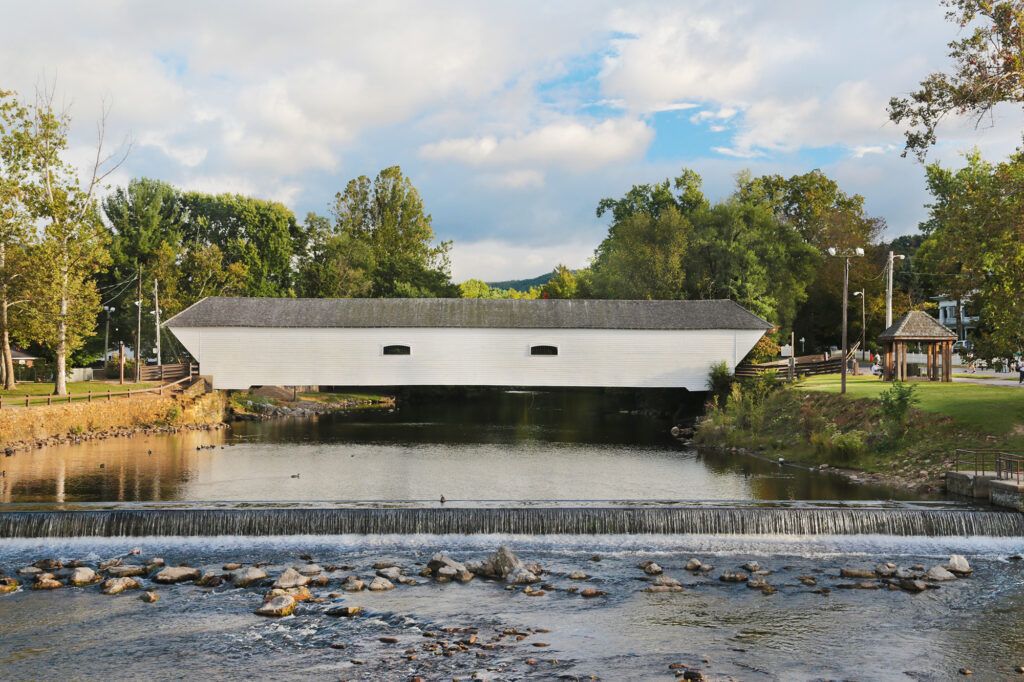
Located in the heart of downtown Elizabethton, the Elizabethton Covered Bridge spans 134 feet across Doe River, which is why some people refer to the bridge as Doe Bridge. The historic bridge is the symbol of Elizabethton, depicted in its city seal and welcome sign.
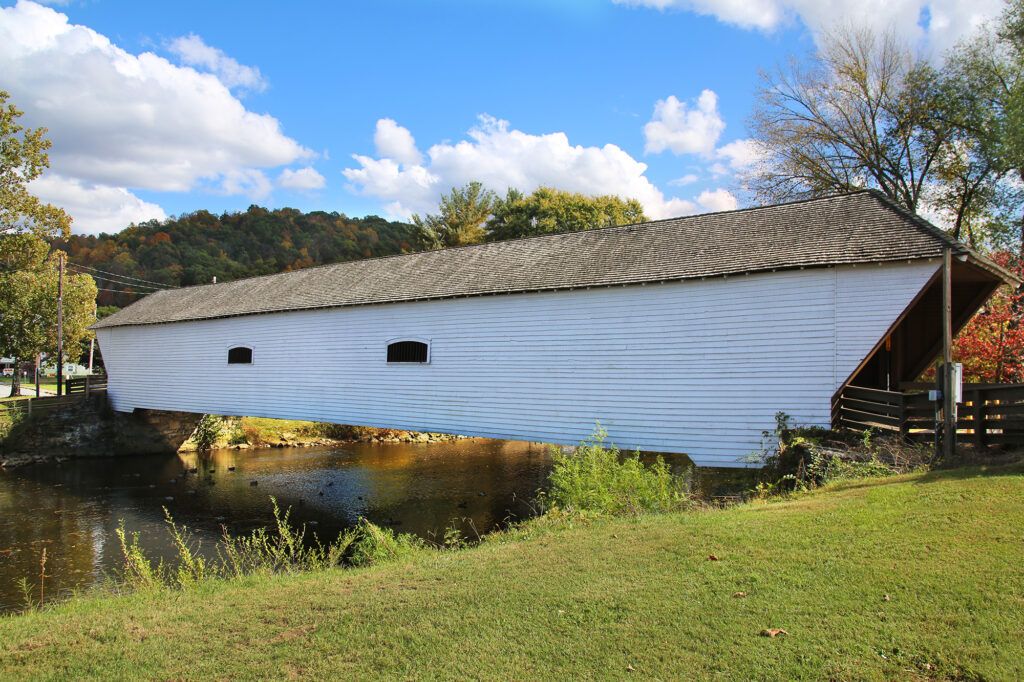
The white clapboard bridge was built in 1882 and contains one span, a covered wooden Howe truss, which is typically constructed of timber diagonals and iron verticals. Each end of the bridge features a projecting truncated gabled roof line.
The covered bridge contains one traffic lane and a single walkway. The curb-to-curb width is 16.4 feet. The Elizabethton Covered Bridge, although now closed to motor vehicle traffic, is still open to bicycles and pedestrians.
The Elizabethton Covered Bridge is located next to a large city park area with walking trails, baseball diamonds, and picnic areas. The covered bridge spans the Doe River and connects the city park area with the downtown Elizabethton business district.
Elizabethton’s Expansion
After the Civil War, the people of Elizabethton wanted to expand the boundaries of their village but were prevented by Lynn Mountain to the east, the Doe River to the west, and the Watauga River to the north. The Doe River flooded often and limited growth to the south.
It was decided that the city would need a bridge over the Doe River. In 1882 the Carter County Court approved $3,000 for the bridge. The court appointed a committee to select a site for the bridge. However, the committee could not find a qualified contractor to build the bridge. When the Doe River flooded, Dr. E. E. Hunter was unable to reach patients across the river. After county officials were unable to find a bridge contractor, they offered the job to Hunter, who accepted the contract and hired experienced people to work on the bridge.
The $5 Bridge
Hunter selected Colonel Thomas Matson, who had been an engineer for the East Tennessee and Western North Carolina Railroad as an engineer and architect. While the bridge cost about $3000 to build, the contractors only made $5, earning the nickname “the five-dollar bridge.”
Surviving The Floods
The bridge was built with special attention paid to the Doe River’s flood potential. According to a 1939 article in the Elizabethton Star, “massive oak pieces were used in the floor, fastened together by enormous steel spikes. Vertical wooden frameworks form the skeleton, over which the heavy weather-boarding was placed.” No doubt that this level of construction has allowed the bridge to stand strong for over 140 years.
During a disastrous flood in 1901, logs from a lumber operation and a barn were thrown against the covered bridge and its supports, however the bridge survived. The Elizabethton Covered Bridge was the only major bridge in the area to survive. During this flood the river crested at 10.5 feet.
The highest crest of the Doe River in Elizabethton, which was 10.92 feet, occurred in the early morning of Jan. 8, 1998, when seven inches of rain fell overnight caused catastrophic flooding killing seven people in Carter County. Other notable floods impacting the Elizabethton Covered Bridge occurred in 1977 when the river crested at 9.34 feet and in 2003 the river crested at 8.20 feet.
However, on Sept. 27, 2024, the level of Doe River was well above the 10 foot mark, which is considered “major” by the National Oceanic and Atmospheric Administration (NOAA). The river crested at 10.84 feet, the Doe’s second highest crest in history. Hurricane Helene, in 2024, brought the flood waters to within inches of the bottom of the bridge.
Festivals at the Elizabethton Covered Bridge
Live music takes place during Covered Bridge Jams on Saturday evenings in the summer and the Covered Bridge Days festival takes place in September featuring country and gospel music performances, activities for children, Elk Avenue car club show, arts and crafts vendors, and fireworks. The Elizabethton Covered Bridge is also along the Elk Avenue route for the annual Independence Day and Christmas parades.
Leave a Reply