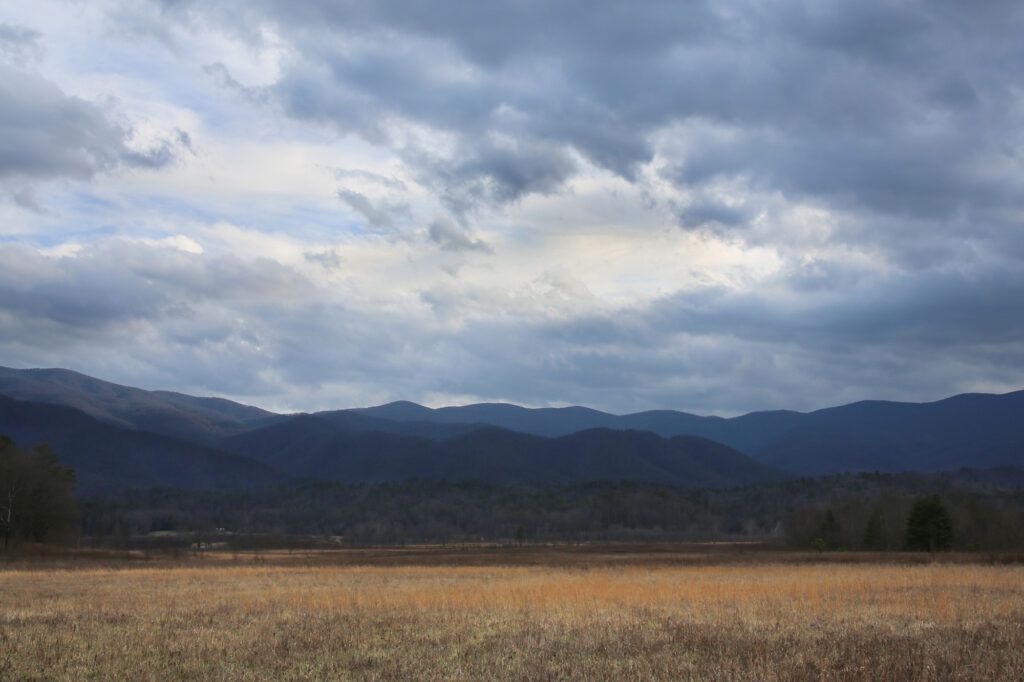
Cades Cove is one of the most popular destinations in the Great Smoky Mountains National Park. Cades Cove is an 11 mile, one way loop. It typically takes 2-4 hours to complete the Cades Cove Loop, possibly longer if you stop to hike or visit during the busy seasons. It has historical sites, animal watching and an impressive waterfall.
If you plan on parking for more than 15 minutes in the Great Smoky Mountains National Park, you need to get a parking pass. You can get them at the park’s visitor centers or purchase online prior to entering the Cades Cove Loop.
Animal Watching
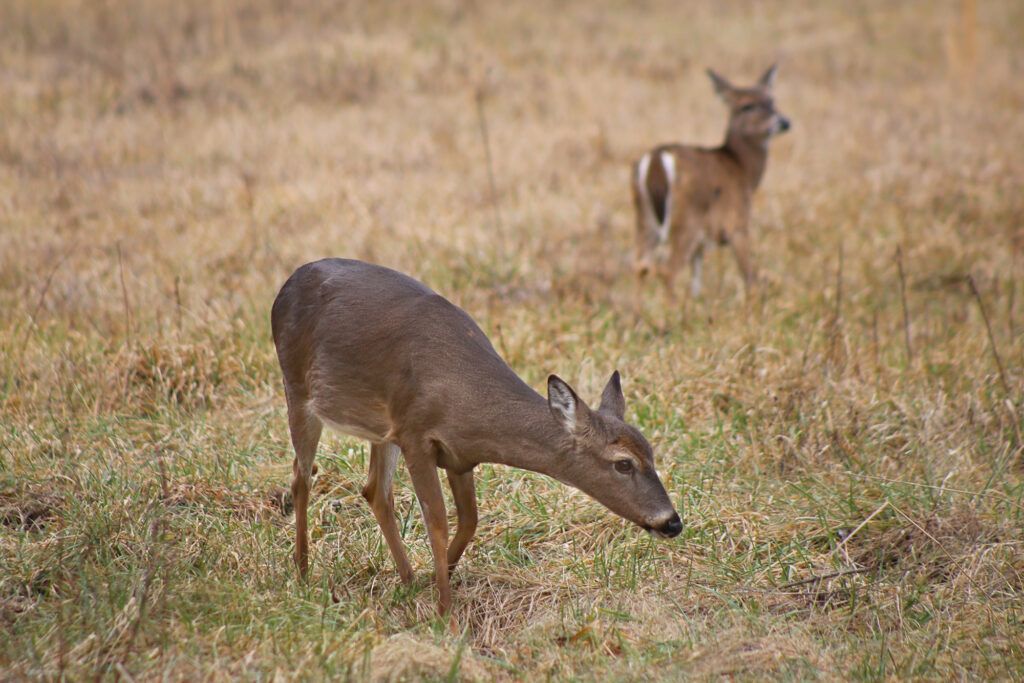
Cades Cove is home to numerous types of animals. Many animals are most active during dawn and dusk. The most common are: white-tailed deer, black bears, and wild turkeys. Bears are common in Cades Cove, especially during spring through fall. White-tailed deer and wild turkeys are frequently seen in the open meadows and fields.
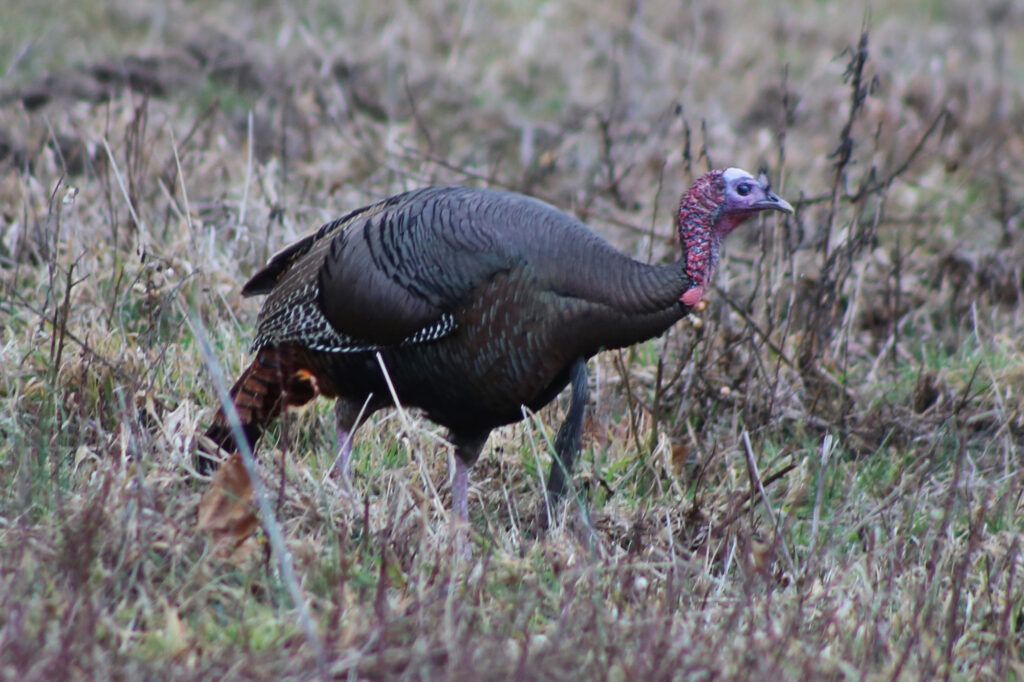
We visited in February, so it was a little to early to see bears, however during our trip we saw lots of deer, several different types of birds including turkey and quite a few squirrels.
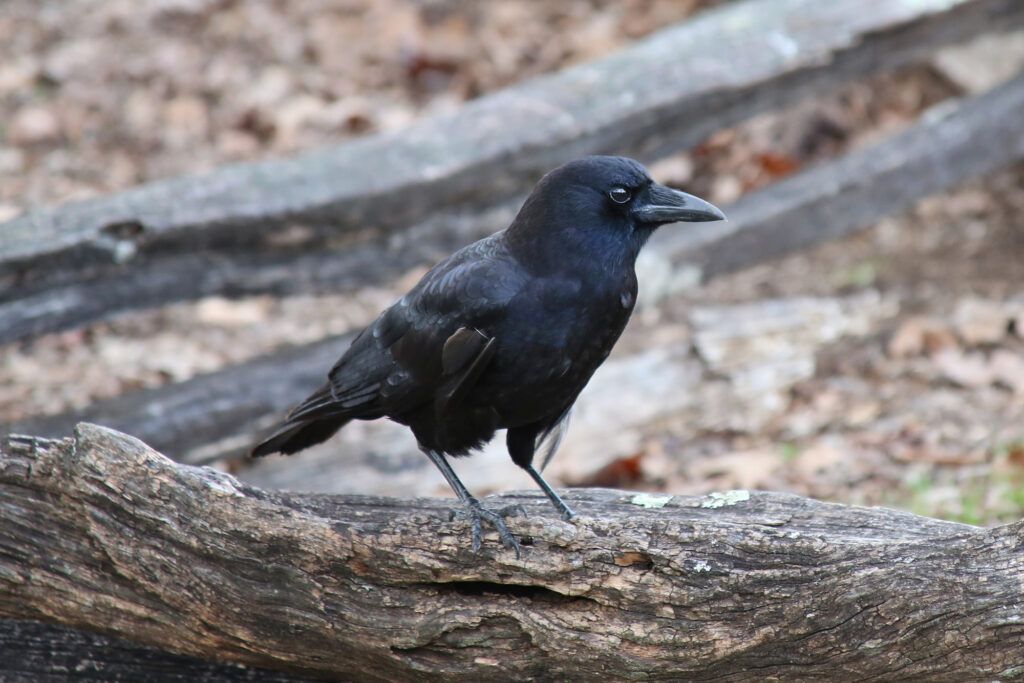
Other animals you may encounter are raccoons, coyotes, chipmunks, squirrels, foxes, skunks, groundhogs, bobcats and various bird species.
Otters and beavers used to be very common in Cades Cove, but over the years had all but vanished. However, over the past few years they have started to grow in numbers inside the Great Smoky Mountains National Park, including Cades Cove.
Do not get too close to any of the wildlife. National park officials prohibit crowding, harassing and feeding wildlife in any part of the park. As a rule of thumb, if your presence is changing an animal’s behavior, you are too close.
John Oliver Cabin
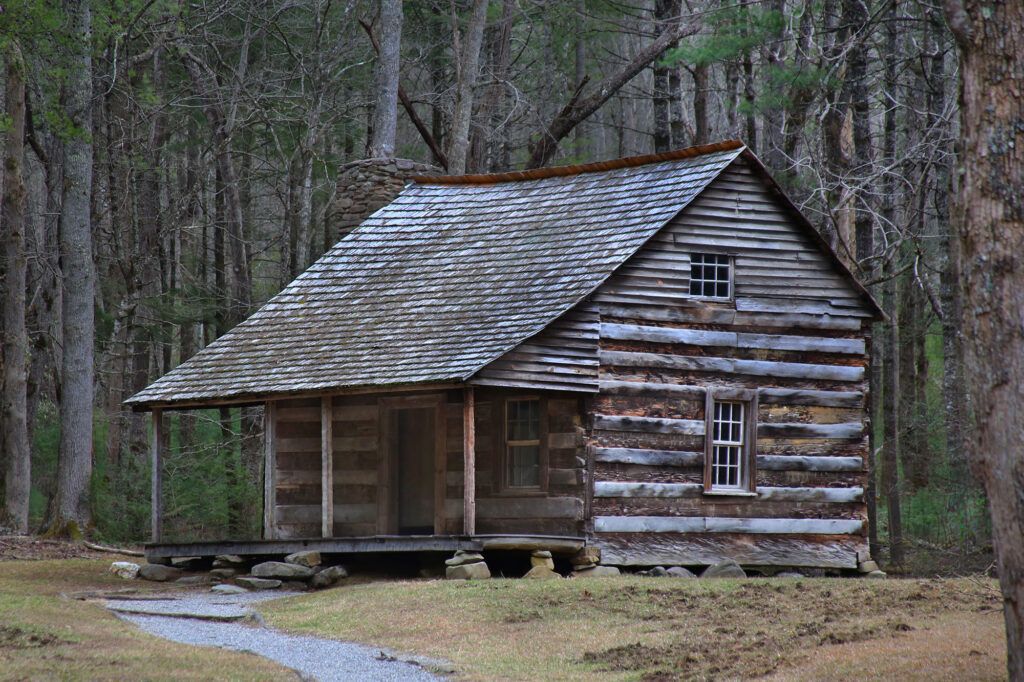
The first stop on the 11-mile Cades Cove Loop is the John Oliver Cabin. The John Oliver Cabin is the first historic structure on the 11-mile Cades Cove driving loop. It is estimated to have been completed sometime around the early 1820s.
John, Lucretia, and their daughter, Mary “Polly,” arrived and settled in Cades Cove in 1818. John Oliver, the first permanent European settler in Cades Cove, fought in the War of 1812 and was a charcoal maker by trade. Generations of Olivers lived on the homestead until the park was established more than a hundred years later.
The John Oliver Cabin is a single-pen log cabin and is actually 1 ½ stories, with two porches. The cabin logs are hewed, cut from their natural form into square lumber with an ax. The cabin is entirely held together by gravity and saddle-notched corners. There were no pegs or nails used to hold it together. The open spaces between the logs were filled with mud and the roof is a wood shingled gable style.
The cabin has two narrow windows. They were designed that way to conserve heat and to maintain the strength of the structure. The south facing window allowed sun to shine in the cabin during the day, allowing light into the cabin.
Some people say that the John Oliver Cabin is not actually the original, which people stay stood about 50 yards or so behind the cabin now identified as the original. The building identified as the John Oliver Cabin is believed to be the honeymoon cabin that the family built for their son to use when he married. Honeymoon houses were typical during this time and usually built on the parents’ property.
There is a 0.3 mile round trip trail leading from the parking area to the cabin. The trail is gravel and flat. The cabin is open so you can walk around inside. Pets are not permitted on the trail.
The Primitive Baptist Church
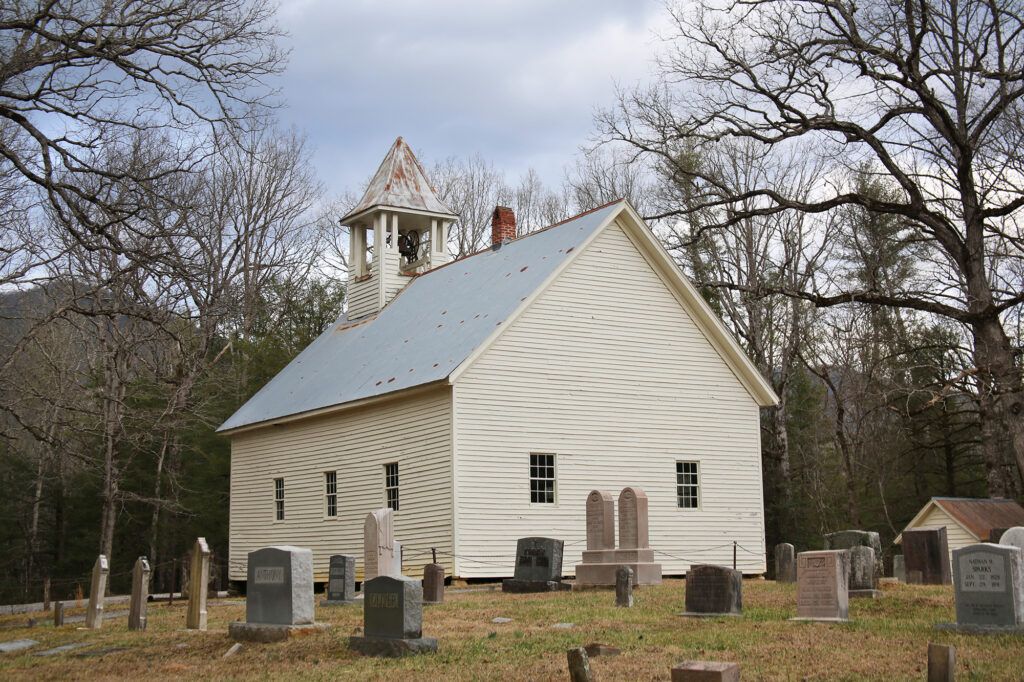
Next you’ll come across an offshoot road that leads to the primitive church. This road is a little bit narrow and can be tricky to pass other cars if you have a wide vehicle.
When we were heading to the church there was a side road to a small parking area with a trail. This is not the parking lot for the primitive church. Stay on the main road. This road will dead-end into the large parking area for the church which is located right at the parking lot.
The church is open so you can view inside. Behind the church is a graveyard with a gravel walkway so you can walk through it. While we were there deer were eating in the wooded area. After visiting the church you’ll return to the main loop road the way you came.
The Primitive Baptist Church, established in 1827, was the first church established in the cove. At first the church had no permanent building for meetings and church meetings were held in the homes of members until the fall of 1832, when a log building was constructed for meetings and services. In 1887 the existing white church building was completed.
The Cades Cove Primitive Baptist Church cemetery is the oldest of the cemetery in Cades Cove with 323 graves of prominent Cades Cove residents and early settlers including John and Lucretia Oliver.
Methodist Church and Missionary Baptist Church
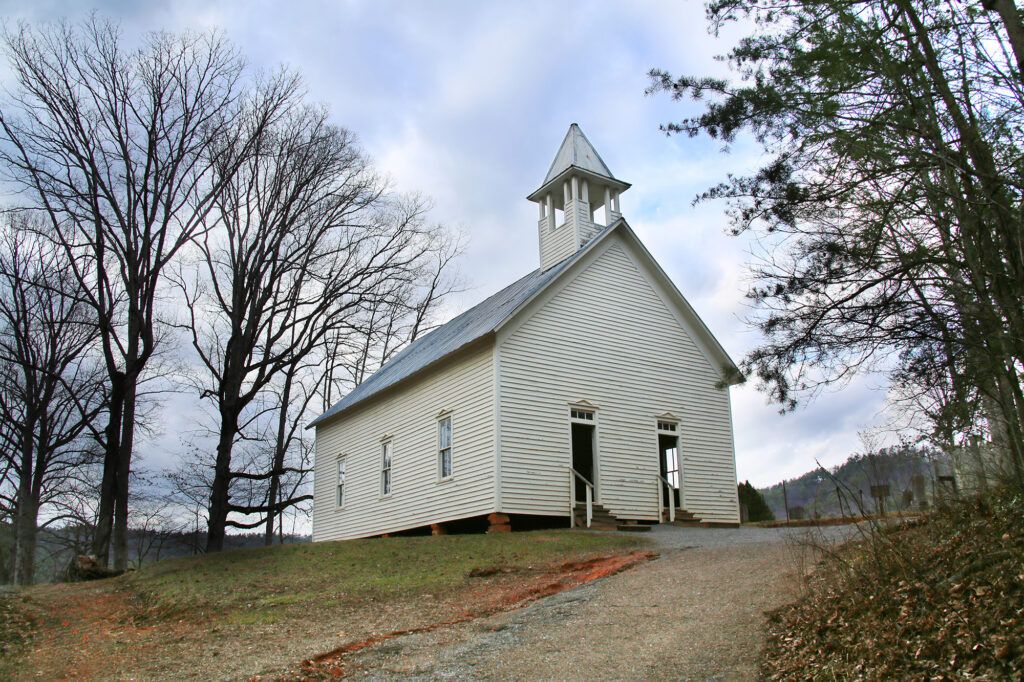
After returning to the main road, you’ll soon reach Cades Cove Methodist Church. It is located right next to the road. It was founded in the 1820s, however the current building was constructed in 1902 by John D. Campbell, who was also its pastor. It took 115 days to build with a total of $115. The cemetery behind the church is the second oldest in Cades Cove and has over 100 grave sites.
The front of the church has two doors to enter the building. During that time the Methodist church believed that men and women should worship separately. There is a large walkway down the middle with pews on either side. Typically during this time many Methodist churches put physical dividers to separate the men from the women, but this church opted to leave it open.
A short distance down the road you’ll reach the Missionary Baptist Church. Missionary Baptist Church was started in 1839 when thirteen members split from the Primitive Baptist Church. The first physical building for the congregation was built in 1894 on Hyatt Hill. It was replaced in 1915 by the current building.
Both churches have a small parking area if you wish to visit the church. Between the two churches there is Hyatt Lane. Should you wish to cut your visit short, this is your last chance. This will take you to just before Dan Lawson Place and bypass anything in between.
Cooper Road Trail
Cooper Road, initially an Indian trail, was the main way to access Cades Cove for early settlers moving into the Smoky Mountain region for the first time.
The Cooper Road Trail is located just about a mile past the Missionary Baptist Church on the right side of the road with a pullout for cars across the road on the left. The 10.9 mile trail is a moderate trail that leads to the Abrams Creek campground. There are a few steep inclines. It is wide, but fairly level. This trail will connect with several other trails along the way.
There is a connector trail (Wet Bottom Trail) that will take you to the Elijah Oliver Place. If you continue on the trail it becomes more challenging by climbing higher and the trail becomes rockier.
There’s an intersection with the Hatcher Mountain Trail and Little Bottoms Trail at 5.7 miles. The Cooper Road Trail continues straight at this intersection. About 7.4 miles down the trail, you’ll see three large rocks that mark the intersection with the Cane Creek Trail.
You will go left to the junction with Goldmine Road, reaching an altitude of 1750 feet. The trail is mostly downhill from here. There are several water crossings after this point. You’ll pass Backcountry Campsite No. 1 on your left.
You’ll reach the Little Bottoms Trail junction at 9.6 miles, which goes left to Abrams Falls. You’ll see Abrams Creek Campground when you’ve hiked 10.5 miles. The ranger station is a little under a half mile from here.
Elijah Oliver Place
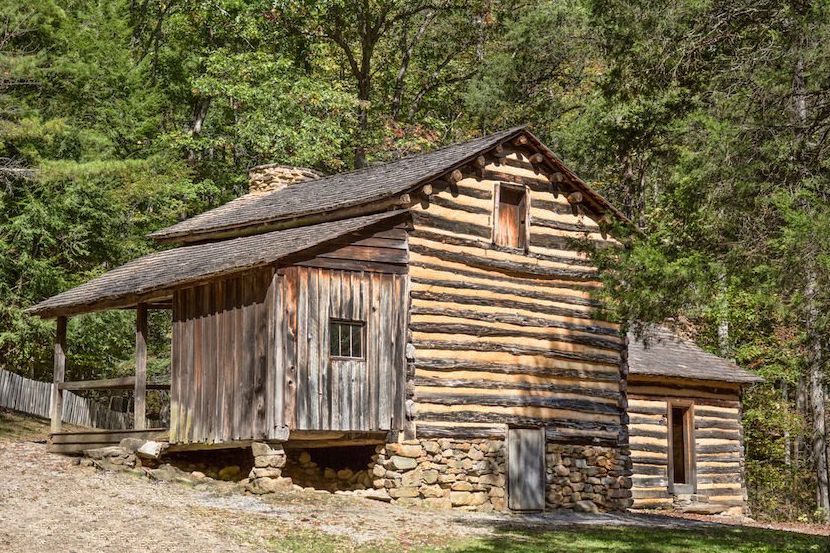
The parking area for the historical Elijah Oliver Place is located on the left side of Cades Cove Loop Road just past Cooper Road Trail. While the parking area is located on the left side of the road, the gravel trail actually starts on the opposite side (right) of the road.
The cabin was constructed by Elijah Oliver, son of John Oliver, in 1866 after his original farm was destroyed during the U.S. Civil War. Elijah Oliver was born in Cades Cove in 1824. The cabin was constructed in a dog-trot style, with a breezeway between the main house and kitchen.
The Elijah Oliver Place, a homestead which includes several buildings, is a one mile round trip walk from the Cades Cove Loop Road. The main cabin was constructed out of logs stacked on top of a stone foundation. In addition to the main cabin, there is also a chicken coop, smokehouse, corn crib, and springhouse. Part of the cabin was built over a trickling spring, which in those days provided refrigeration for eggs, butter, milk, and other foods.
The original settlers in Cades Cove were known for their hospitality and never turned away strangers in need food or a place to spend the night. Elijah Oliver enclosed a portion of his front porch as a “stranger room” to house those in need.
Abrams Falls

The crown jewel of Cades Cove is Abrams Falls, a 20 foot waterfall. The trail to this moderately difficult 5.2 mile roundtrip hike is located just off the Cades Cove loop and includes 675 feet of elevation gain.
Abrams Falls is named after a Cherokee Indian chief named of Oskuah, who later became known by the name Abram (or Abraham) whose village was once located several miles downstream from the waterfall.
After parking, cross the footbridge at the trailhead then turn toward the left to head to the waterfall. If you go right at this junction it would lead you to the Oliver Place. The scenic trail follows Abrams Creek. Otter can occasionally be spotted in or near the creek.
At little over 2.6 miles you will reach the short side trail that leads to Abrams Falls. Turn left and cross a footbridge to reach the waterfall.
Swimming at Abrams Falls is extremely dangerous due to strong currents and the presence of an undertow. At least 29 deaths have occurred on this trail since 1971 as a result of water-related accidents.
Visitors Center
About halfway through the Cades Cove Loop Road, you’ll reach the Cades Cove Visitors Center. This is the only place along the loop with restroom facilities. The visitor center is open daily, with the only exception of being closed on Christmas day. Opening hours vary by season.
Please note: pets are not allowed inside any of the buildings.
The visitors center was built in the 1970s, however many of the buildings surrounding it are from the mid-1800s and are open for visitors to walk through. The gristmill is located on its original site. Other historic buildings located in the Cable Mill Area next to the visitors center were brought in from elsewhere in the park.
After a stop at the visitor center, be sure to visit the gristmill, barn, corn crib, smokehouse and old molasses furnace.
When James V. Cable, son of John P. Cable, inherited his father’s mill and farm, he taught himself the trade of a blacksmith and his blacksmith shop was built in the 1950s.
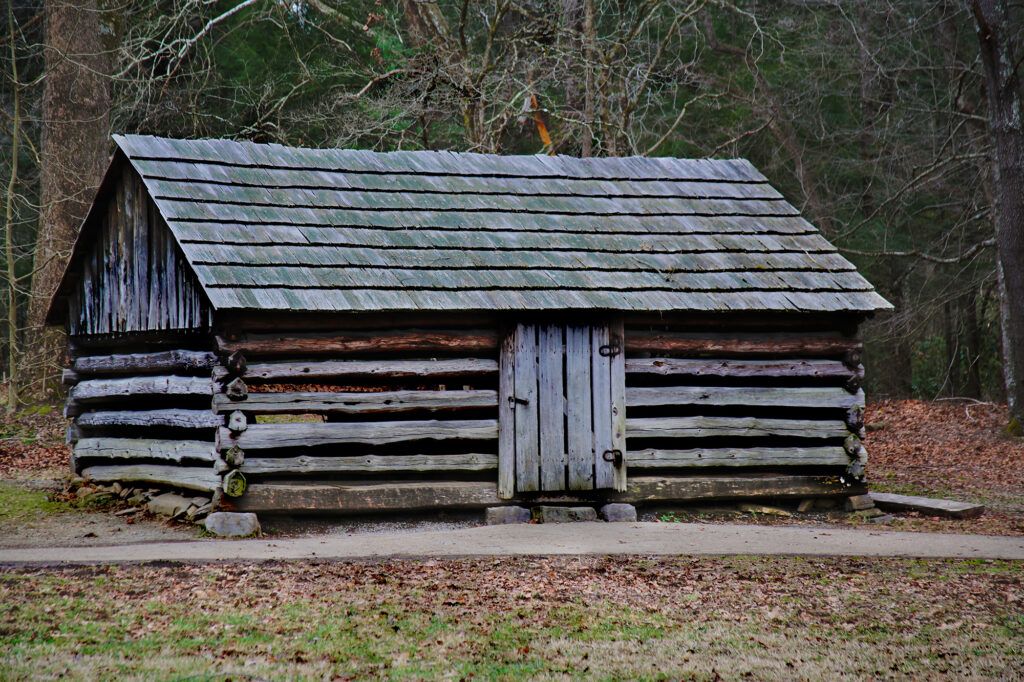
Built in 1879, the Gregg-Cable House, also known as the Becky Cable House, is considered to be the first frame home built within Cades Cove. Frame houses were once popular in the cove but were removed after the park was created due to their more modern appearance. It is believed to have been constructed using some of the earliest timber cut on the Cable Mill. The home was initially situated on a one acre tract of land that John Cable sold Leason Gregg. The Gregg-Cable house was originally set up as a general store on the first floor by the Gregg family, with the residents living on the second floor. Almost a decade after the home was built, Becky Cable and her brother Dan purchased the house and operated the store for approximately eight more years before they selling the contents and turning it into a boarding house.
Cable Mill

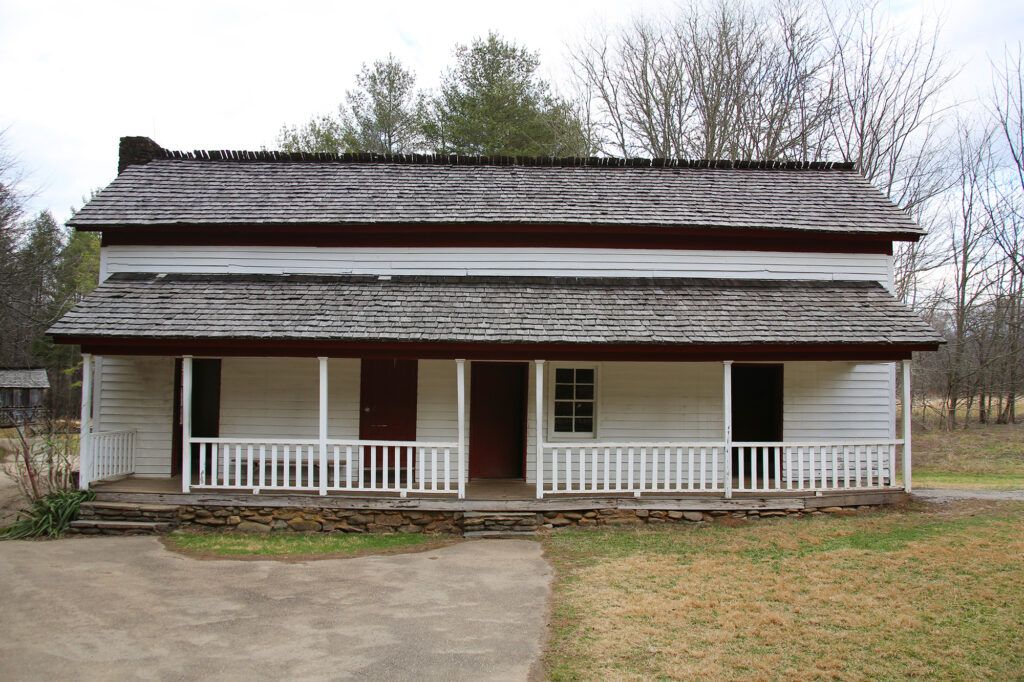
The Cable Mill Area, located near the visitors center, contains many of the buildings typically found on Appalachian farmsteads. The fully-functioning gristmill is perhaps one the Cove’s most well known attractions. The gristmill continues to fully operate today, with millers overseeing its daily operations.
John P. Cable built his water-powered gristmill in 1867. It was one of several located in Cades Cove that served about 670 residents. The stones on the John Cable Grist Mill are the original stones and have been in use for 150 years.
A dam on Mill Creek directs the water through a canal to a wooden flume that channels water onto the top of the mill wheel. The eleven foot tall water wheel is an overshot wheel where water strikes the top of the wheel and activates the mechanism that grinds the corn with a mill stone.
As the wheel turns, it turns a runner stone. The corn or grain is fed into an area between the runner stone and the stationary stone from a gravity-fed hopper.
During this time period, the barter system was frequently used to purchase goods and services. The individuals who owned the mill would typically charge customers a percentage of the ground items. For example, the miller would take one-sixth of any wheat ground and one-eighth of your corn.
Henry Whitehead Place
A short distance down Forge Creek Road leads to the Henry Whitehead Place, the last example of a sawn log house inside Cades Cove. The smaller, one room, cabin in the back was built for Matilda Shields by her brothers in 1881 when Matilda and her young son were abandoned by her husband during a visit to see family in Cades Cove. Around the same time, Henry Whitehead lost his wife and became a single father to three young daughters. Henry and Matilda married in 1887, and he built the larger home in the front between 1895-1898.
The building next to the cabin is a smokehouse, one of only five remaining in Cades Cove today. The floors of smokehouses were dirt on which a fire could be built. Freshly cut oak or hickory wood was often used. Sometimes water was added to older wood to increase smoke production. Smokehouses typically have interior shelves on which the smoked meats could be stored for later use. In Cades Cove, the meat was almost always pork because hogs were inexpensive to feed and easy to raise.
The Henry Whitehead Place is located 0.75 miles down Forge Creek Road. Forge Creek Road is located just past the exit of the Cades Cove Visitor Center parking lot.
Cades Cove Nature Trail
The Cades Cove Nature Trail is an easy hike. The trail runs in a circle so no matter which direction you start, you will end up back where you started when you finish your hike. The trail is mostly flat and has tall trees which provide shade in the warmer months.
There is also a shallow creek crossing, however the bridge has a handrail. Bears and raccoons have been known to frequent the trail.
The trail is located about 1 mile past the visitor center. The trail is not wheelchair or stroller accessible.
Dan Lawson Place
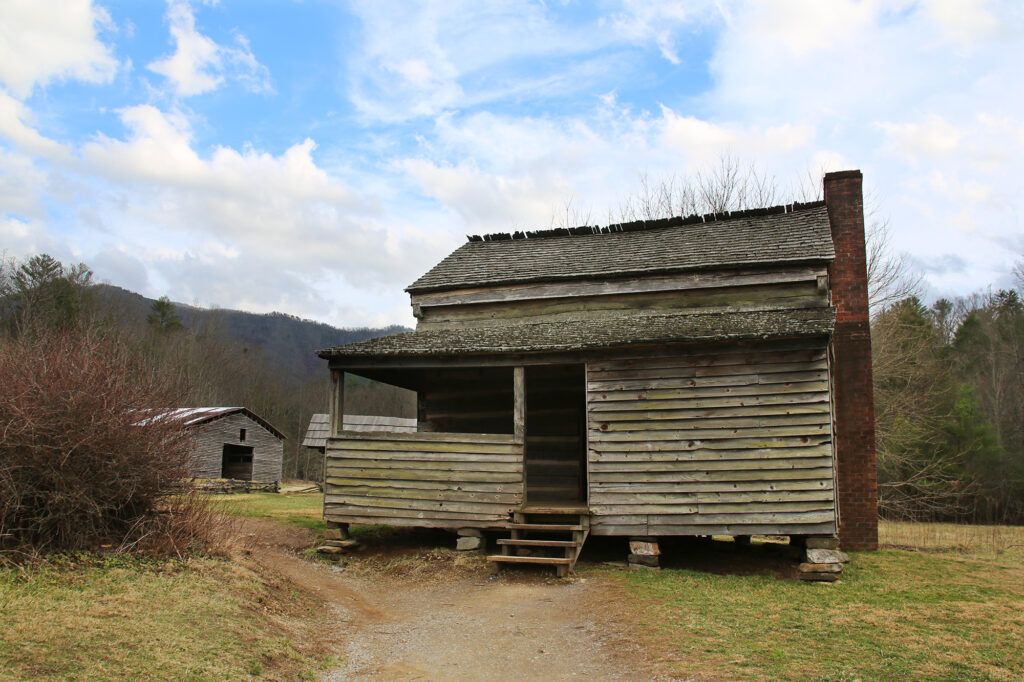
The Dan Lawson house was originally constructed in 1856 using hewn logs, but later additions were framed. The house is a transitional piece of architecture featuring sawn lumber and siding covering the entire building. Viewing the house from the side offers a clear visual of these additions. The brick chimney, unusual for the time and locale, was built from bricks made on site. By the time of his death, the cabin had been expanded to have a large porch and an additional second story. The small building closest to the house is a smokehouse and the other is a granary.
The property where the cabin was built was originally owned by Peter Cable, Dan’s father-in-law. Many historians believe that Peter helped Dan build the homestead noting the quality of the carpentry and workmanship.
Dan Lawson was Cades Cove’s postmaster for over 25 years. For many years the post office was believed to be located in the center room of the cabin. The small room on the front porch has an interior window where some people speculate that citizens picked up their mail through the window. Another idea was that this room functioned as an office during Dan Lawson’s time as Justice of the Peace. Most likely this room started out as a “stranger room” like the one at the Elijah Oliver Place and was then converted for a new use.
The Dan Lawson Place is located about 7 miles into the Cades Cove Loop Road just past the intersection with Hyatt Lane.
Tipton Place
Tipton Place was part of a 640-acre land parcel obtained by Revolutionary War Veteran William “Fighting Billy” Tipton under the Tennessee Land Grant in the 1820s. William, who never actually lived in Cades Cove, is the first recorded legal landowner.
William sold his land to friends and relatives including his grandson, Colonel Hamp Tipton, who built the two story cabin in the 1870s. The homestead included a double-pen corn crib, old-fashioned bee gums, blacksmith shop, and a cantilever barn.
The cantilever barn was built in 1968 and is a replica of the original. This type of barn, common in the 1800s, was designed to allow a wagon to pull through the barn and unload hay or feed for the livestock. The two pen design, with its large, overhanging eaves, provided protection for the animals and equipment.
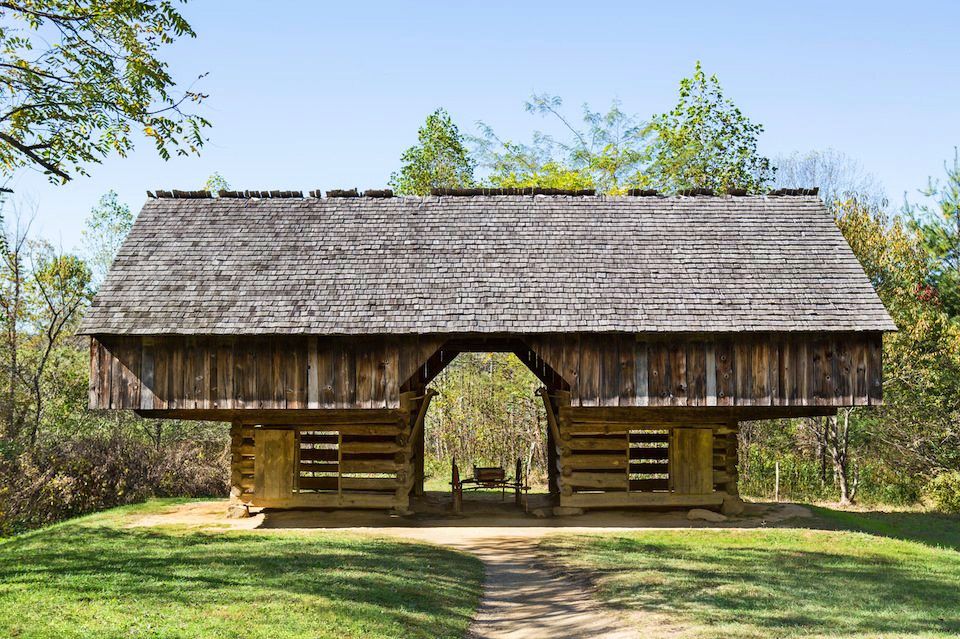
In 1878, the home was rented to James McCaulley who built his own homestead which included blacksmith and carpentry shops.
In 1895, Hamp Tipton passed away and his estate was sold to Reverend William H. Oliver, whose family lived there until the land was purchased for the park in 1931. The site is sometimes called the Tipton-Oliver homestead in reference to both families that lived there.
Carter Shields Cabin
The Carter Shields Cabin is the last historical structure that you can visit on the Cades Cove Loop Road. Will Sparks built this cabin around 1880. The cabin has one room with a fireplace, a staircase leading to the loft above, and a covered porch outside. It is the only building left remaining on the property.
Carter Shields, who the cabin is named after, was one of a handful of owners over the years. He didn’t live in the cabin until 1910. George Washington “Carter” Shields fought with the Union Army during the Civil War. He was severely wounded in the Battle of Shiloh in April of 1862. Shields chose to retire in Cades Cove, and he lived in the Carter Shields Cabin from 1910 – 1921.
Nearby Places to Visit
There’s lots more to explore in the Great Smoky Mountains National Park. Right by Cades Cove is the Townsend Wye, which is located where Little River Road and Lamar Alexander Parkway intersect, forming a Y just inside the Townsend entrance to the Great Smoky Mountains National Park. The Wye a popular swimming and tubing destination.
We have a roadside waterfall day trip that includes eight waterfalls with just over an hour of drive time to eight roadside waterfalls that starts right by Cades Cove. Most of these waterfalls are wet-weather waterfalls and are best viewed after a lot of rain or during the Winter and Spring months.
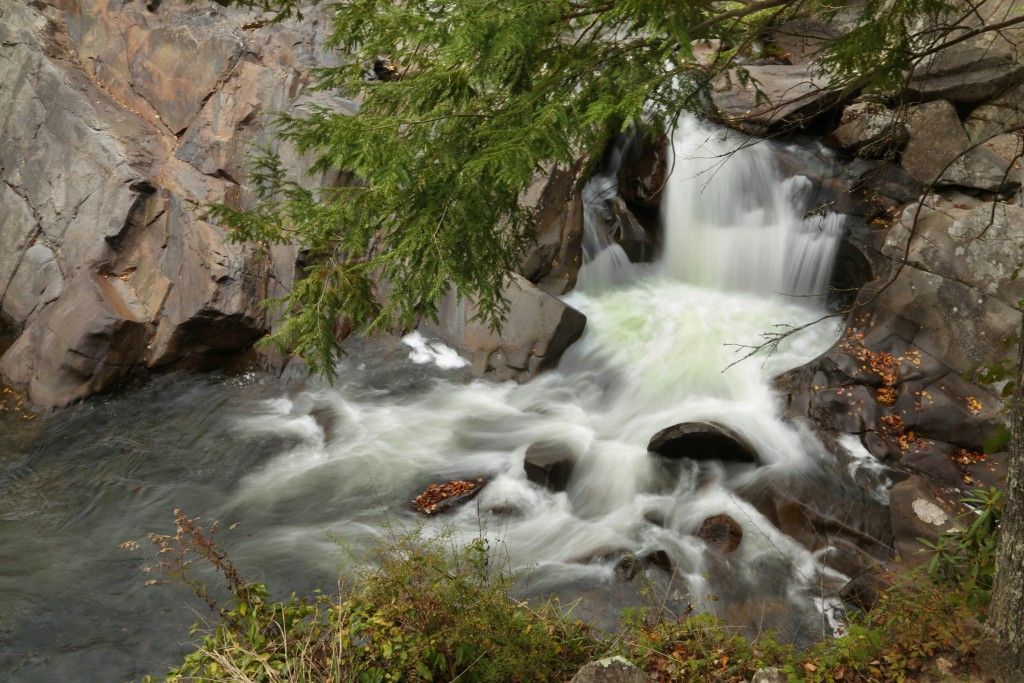
We also have another waterfall day trip located inside the Great Smoky Mountains National Park, which includes five waterfalls.
Leave a Reply