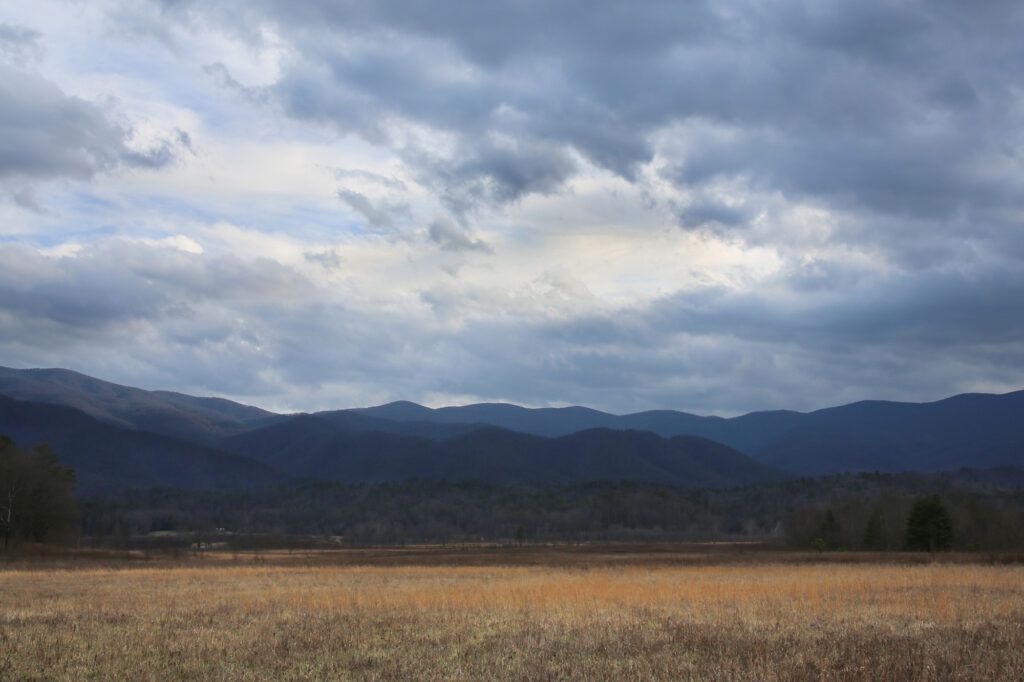
If you’re wanting a vacation where your whole family can explore nature, learn something new, and make unforgettable memories, the Great Smoky Mountains might be the perfect place. With misty mountain views, incredible wildlife, and stories that go back hundreds of years, there’s something for everyone in this one-of-a-kind national park.
Where Are the Great Smoky Mountains?
The Great Smoky Mountains are part of the larger Appalachian Mountains. They stretch across the border between eastern Tennessee and western North Carolina. Most of the area is protected by the Great Smoky Mountains National Park, which covers about 522,000 acres. That’s more than 800 square miles of forests, trails, rivers, and peaks!
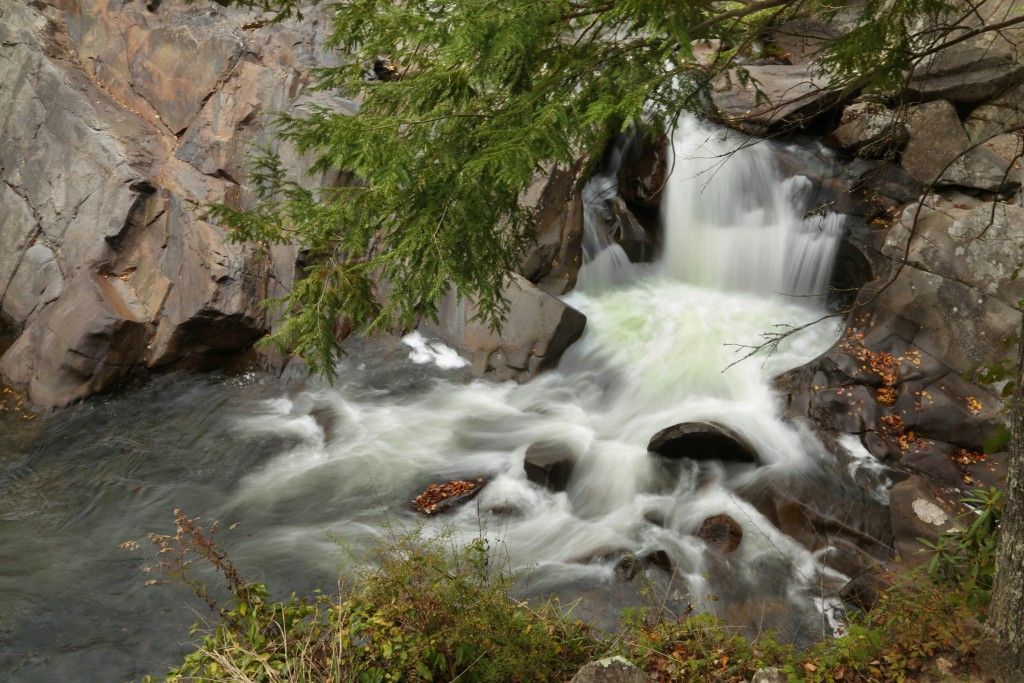
The size and natural beauty of this park is why it’s the most-visited national park in the United States. Millions of people come here every year to hike (to waterfalls), camp, take photos, and learn about nature and history.
We live just outside of the Smokies. For those who aren’t in this area, and haven’t visited, let me tell you a little about why you might want to make your next trip be to the Smokies.
What Makes the Smokies “Smoky”?
If you’ve ever seen a photo of the Smoky Mountains, you probably noticed the soft blue mist that seems to hang over the hills. That’s where they get their name! This fog isn’t from smoke or pollution – it’s a natural haze created by plants.
Trees and plants release tiny particles called volatile organic compounds (VOCs). When sunlight hits these VOCs, they create that blue-colored mist. It’s like the mountains are always wearing a gentle blanket of fog.
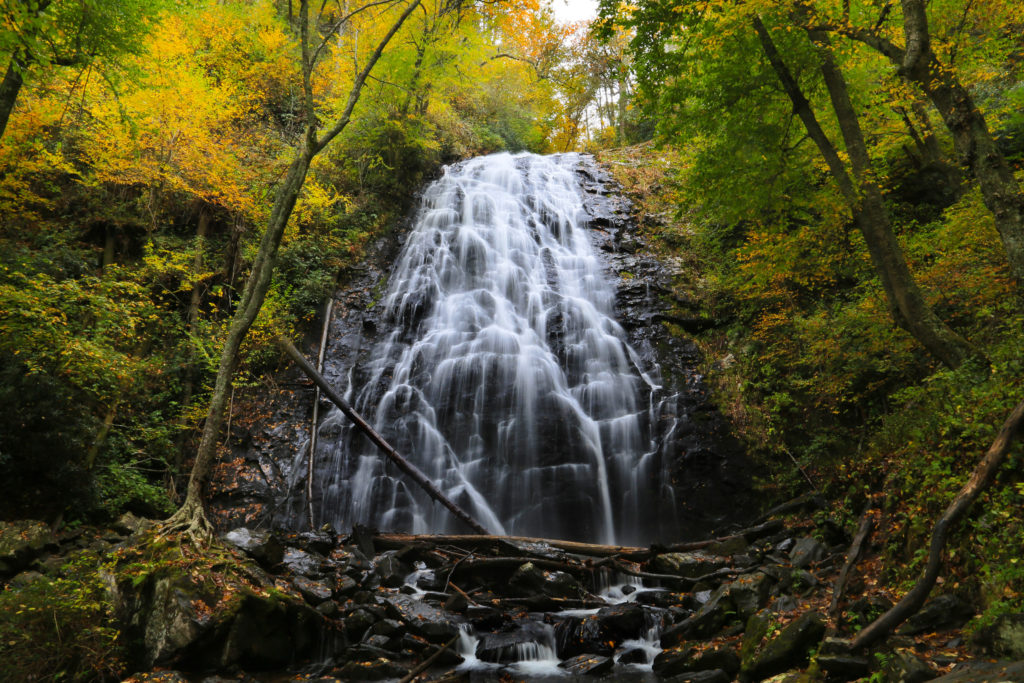
This color is also the reason for the Blue Ridge mountains, which are near the Smokies, and where you will find the Blue Ridge Parkway, home to some of our favorite waterfalls.
Natural Features: Mountains, Waterfalls, and More
The Smokies are filled with stunning sights. The park has over 800 miles of hiking trails, dozens of beautiful waterfalls, and mountain peaks that rise over 6,000 feet high. One of the tallest is Kuwohi, formerly called Clingmans Dome, which stands at 6,643 feet and has an observation tower where you can see for miles.

Other natural wonders include:
- Grotto Falls: A moderate hike to an amazing 25 foot waterfall that you can walk behind. (located on Roaring Fork Motor Trail, seasonal road. Check the GSMNP website to see if it is open.)
- Laurel Falls: An easy to moderate family-friendly hike that ends at a gorgeous waterfall. (currently closed for renovation)
- The Sinks: A roadside waterfall you can walk right up to at close-up overlook right from the parking lot.
- Cataract Falls: The easiest waterfall you hike on a trail to reach. It is a wet weather waterfall, so it is best to visit after a good rain or in the Spring.
- Meigs Falls: Which has a roadside to view, but if you want to get close, prepare for a strenuous hike. (Hey, not all the hikes can be easy.)
- Roaring Fork Motor Nature Trail: A scenic drive filled with wildflowers, old cabins, and maybe even bears!
- Cades Cove: A wide valley where you can bike, drive, or hike while spotting deer, turkeys, and historic buildings.
- Ramsey Cascades: Looking for something more challenging? This trail is a strenuous 8 mile hike that becomes narrower and rockier as it ascends more than 2,000 feet to see the tallest waterfall in the Great Smoky Mountains National Park.
- The Townsend Wye: One of the best swimming holes in the park, just outside of Cades Cove.

How Many Waterfalls are in The Great Smoky Mountain National Park?
The Great Smoky Mountains National Park has over 2,900 miles of streams and over 100 waterfalls. But there are also thousands of unnamed cascades, roadside trickles, and seasonal falls that appear after rain. The National Park Service itself only publishes only a select few waterfalls, not a complete inventory.
It bears mentioning that the less published a waterfall is, the less the trail is maintained and might require going off trail and even bushwacking to reach.
Check out our Waterfalls in the Great Smoky Mountains National Park article for information including distance, difficulty and a brief description of 37 waterfalls located inside the park ranging from the most popular to a few almost unknown.
Plants of the Smokies: A Living Rainbow
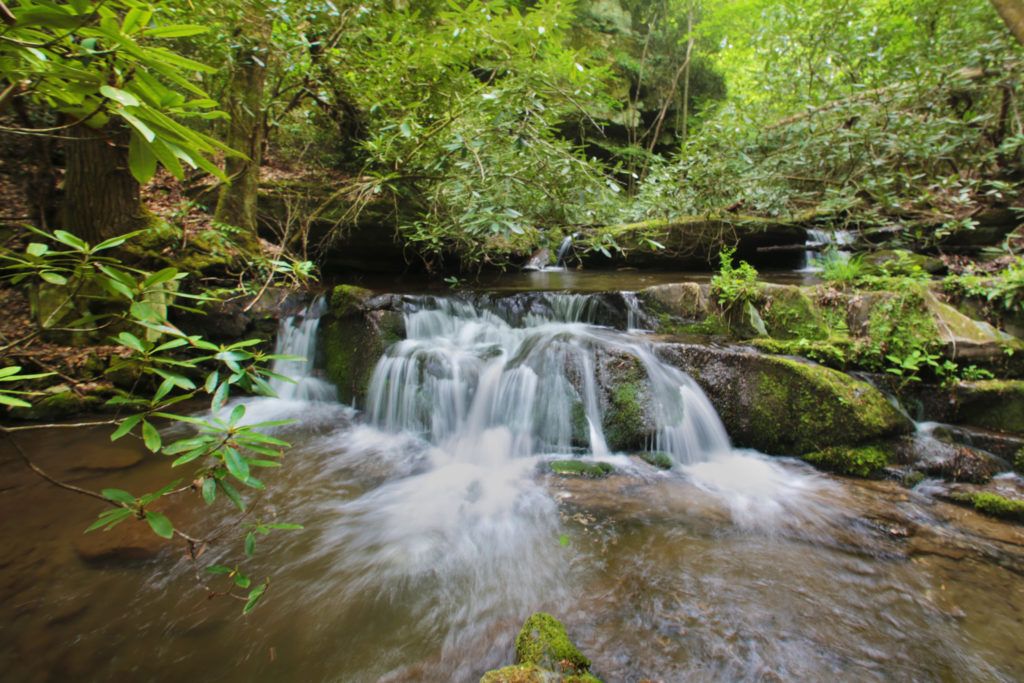
The Great Smoky Mountains are home to one of the most diverse forests in the world. That means there are more kinds of trees, wildflowers, and shrubs here than in most places on Earth. The colors change depending upon the season, often being referred to as a Living Rainbow.
Some fun facts about the plants here:
- There are over 100 species of native trees.
- In spring, colorful wildflowers like trilliums and lady slippers cover the ground.
- Summer brings lush green forests and blooming rhododendrons.
- In the fall, the leaves turn brilliant shades of red, orange, and gold.
This makes the park a great place to visit in any season. Every few months, it looks like a whole new world.
Animals You Might See
Whether you’re hiking a trail or just driving through the park, keep your eyes open, you never know what animals you might spot! The park is home to thousands of species of mammals, birds, fish, reptiles, and insects.

Some of the most popular animals to look for include:
- Black bears – about 1,500 live in the park! But don’t worry, if you don’t bother them, they won’t bother you. And if you see cubs, look for their mommy. She’s always close by.
- White-tailed deer – We’ve been able to get within 20 feet to photograph one from a pull off in the comfort of our car.
- Wild turkeys – Did you know wild turkeys can fly?! Surprised us too, when one flew over the road right in front of us.
- Elk, which were reintroduced in 2001 and can be seen in places like Cataloochee Valley. (Elk are most commonly found in the North Carolina section of the Smokies near Cherokee.)
- Other lesser known animals include red foxes, raccoons, and salamander. The Smokies are known to have one of the widest variety of salamanders in the world.
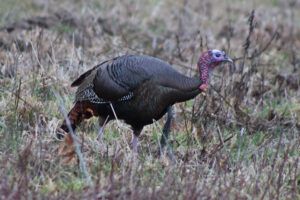
Note: Never approach or feed wildlife. Keep a safe distance, and use binoculars or a camera to get a closer look!
We’ve gotten various photos over the years by having patience and a good telephoto lens.
Being Safe Around Wildlife
With all this wildlife, you might not know what to do. So here are some helpful tips to keep you and them safe at all times. Remember, animals in the Smokies are protected as part of the national forest. Each animal plays a part in balancing the ecosystem.
To help make both you and the animals safe, here are some basic tips.
Avoid Feeding Wildlife
When animals are fed, they expect (other) humans to keep feeding them. This could mean a loss of knowing how to hunt and scavenge for themselves. It could also mean that animals might come up, and expect food, and turn aggressive if they don’t get it.
The locals have a saying: “A fed bear, is a dead bear” because if an animal like a bear goes after humans for food or comes around looking for food too many times, the rangers will be forced to put them down.
A new law was passed in Tennessee, that starting July 1, 2026, it will be a Class B misdemeanor for feeding bears in restricted areas and is punishable by a fine of no less than $250. Any unknowing violation will receive one written warning only for a first offense, with a second offense also punishable by a fine of no less than $250.
In the Great Smoky Mountains National Park federal law prohibits feeding wildlife inside the park. Those caught feeding bears inside the parks limits can face fines of up to $5,000 and a six-month jail sentence.
Approaching Animals
Seeing some of these animals for the first time it is common to want to photograph them, or even take selfies with them. Remember, these animals are not only real, but they are wild, and can spook easily.
This means you want to stay back, and use a telephoto lens or the zoom feature on your phone. If the behavior of the animal changes, stop what you are doing and approach no closer.
If you get too close, you will spook the animal, which will trigger its fight or flight reflex and it may run away. This produces unnecessary stress on the animal (much like how we experience stress), and the loss of food they were eating could be a problem for them.
An Animal Cornered
If you do spook an animal, and it feels like there is no where to go, it will often fight back. Backed into a corner or surrounded, many animals will assume there is no other options, but to fight back. Just because they are cute and cuddly looking doesn’t mean they aren’t surprisingly strong. Remember, none of these have sat on the couch watching TV. They are generally very lean, and powerful for their size.
A Momma and Her Babies
Finally, never get between a mother and her children. The saying about being protective like a Momma Bear isn’t just a cute saying. Bears will aggressively protect their young.
We were out hiking once, and saw a couple of cubs at a distance. My kids wanted to get closer, but I held them back, and started looking for Momma Bear. She’s always close by, and the worst place you can be in between her and her cubs.
Some animals are also territorial. If you see signs of a den, or other nesting area, move away, just be safe. The average person cannot tell the difference between an abandoned animal habitat and one in use. Just because no animals are there, doesn’t mean it’s not active – they could be out gathering food, supplies for their area, or other things.
Even something small like a bird shouldn’t be ignored. While most birds are small, their beaks and claws can still hurt if they make a run at you.
Bear Warnings and Closures
The Great Smoky Mountains National Park will post Bear Warnings on their website. A bear warning means bears are active, and extreme caution should be used. You should be vigilant while in these areas and not approach any bears that you may encounter.
They also have Bears Closures, which are areas that are closed due to aggressive bear activity and cannot be accessed. Do not enter an area that has been closed due to bear activity. In 2026 there have been instances of hikers who have been chased by bears and had backpacks swiped on trails with bear warnings and one instance of a bear attack on a park visitor who entered a closed trail.
Bear encounters increase in the Great Smoky Mountains during spring, as mother bears rise from their dens with young cubs and search for food that may be limited early in the season.
A Park Full of History
The Great Smoky Mountains aren’t just rich in nature—they’re rich in stories, too.
Native American History
Oconaluftee is the southern gateway to the Smokies neighboring Cherokee, North Carolina, and the Qualla Boundary. The Cherokee people lived in these mountains long before settlers arrived. They had deep connections to the land and still play an important role in the region today. The nearby Museum of the Cherokee Indian is a great stop if you want to learn more.
A must-see is the renowned drama, Unto These Hills. Millions of people have experienced the heart-wrenching drama since its debut on July 1, 1950. It tells the triumphant story of the formation of the Eastern Band of Cherokee Indians from first contact with Europeans through the years following the infamous Trail of Tears. The two-hour drama is located at the Mountainside Theatre in Cherokee and runs selective evenings in May through August. Check their website for dates and prices.
Early Settlers
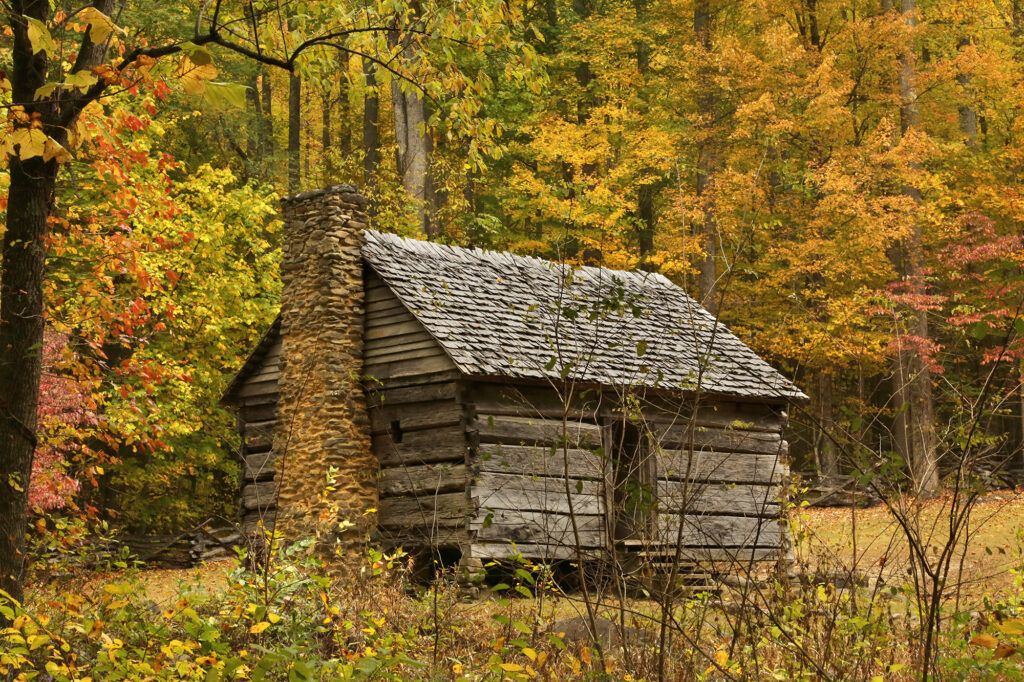
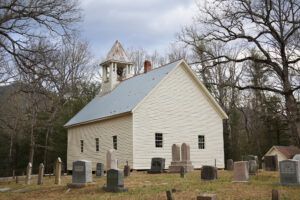
In the 1800s, European settlers moved into the area and built homes, farms, and churches. Many of their cabins and barns are still standing in places like Cades Cove and Roaring Fork. You can walk through these areas and imagine what life was like over 150 years ago.
Creating the National Park
The Great Smoky Mountains National Park was officially established in 1934. It was made possible thanks to the hard work of local communities, conservationists, and the Civilian Conservation Corps (CCC), who helped build trails, roads, and facilities.
Things to Do With Your Family
There are so many ways to enjoy the park, whether you like hiking, learning, or just relaxing in nature.
1. Go Hiking
There are trails for every skill level. Some favorites for families include:
- Gatlinburg Trail: Easy and flat, just over 3 miles round trip. Note – parking in the Great Smoky Mountains National Park for more than 15 minutes requires a parking pass.
- Laurel Falls Trail: Paved and only 2.6 miles long. (temporarily closed for renovation)
- Cataract Falls: Easy, 15 minute family friendly trail that is perfect for a beginning hiker that starts behind the Sugarlands Visitor Center.
- Kuwohi Trail (previously known as Clingmans Dome Trail): Short but steep. At the top you’ll have a 360 degree view around the entire mountain top… a view like none other.
Of course, you’ll want to visit some waterfalls, so we have several available, including a Smoky Mountain Roadside Waterfall Day Trip (if you don’t feel like hiking) and a Smoky Mountains National Park Day Trip.
2. Take a Scenic Drive
In addition to our Waterfall Road Trips, there are other places for a scenic drive. In addition to the Roaring Fork Motor Nature Trail mentioned previously, you can find:
- Newfound Gap Road crosses the mountains and offers many pull-offs for photos.
- Cades Cove Loop lets you drive through a peaceful valley with lots of wildlife and history.
3. Visit a Visitor Center
The park has several visitor centers, including Sugarlands and Oconaluftee, with maps, exhibits, and friendly rangers ready to answer questions. You can also purchase your parking pass at the visitor centers.
4. Go Camping or Have a Picnic
There are many campgrounds and picnic areas perfect for family fun. Often these can be found either at, or near trailheads or recreation areas in the Smoky Mountains. Just remember to follow the Leave No Trace rules: pack out everything you pack in!
5. Become a Junior Ranger
Kids can pick up a Junior Ranger booklet at any visitor center. By completing fun activities and learning about the park, they can earn a real badge.
Protecting the Park
Because the Smokies are so special, people work hard to protect them. Park rangers and scientists help keep the forest healthy, study animals, and make sure future generations can enjoy this place too.
Some things you can do to help:
- Stay on marked trails.
- Don’t pick flowers or disturb wildlife.
- Carry out all your trash, and throw away items in bear safe garbage cans.
- Follow the park’s rules and be respectful of others. (This includes rules involving our four legged family members.)
- Don’t build cairns or move rocks, which can disturb the homes of native plant and wildlife.

By being a thoughtful visitor, your family becomes part of the team that helps the park stay beautiful.
When to Visit and What to Know
The Great Smoky Mountains are open year-round, however some roads and trails close during the Winter seasons, including the Roaring Fork Motor Trail. Here’s a quick look at the seasons:
- Spring: Great for wildflowers and cool hikes.
- Summer: Warm and green, with lots of wildlife. The trees keep the area cool, but you might want to bring some water.
- Fall: Famous for colorful leaves. Take a scenic drive to capture it all.
- Winter: Quiet and peaceful, with fewer crowds.
Not all trails are maintained. The popular ones are, but some of the lesser known ones are not maintained as often. One of our favorite trails, the Rhododendron Trail, always has large fallen trees blocking the trail making it impossible to reach the end.
Good to Know:
- The park is free to enter, but you do need a parking pass if you’re stopping for more than 15 minutes.
- Weather can change quickly. Bring layers!
- Cell service is limited in many areas. So let people know where you’ll be going and when to expect you back.
- If solo hiking and your phone is backed up to a cloud, take a photo of yourself at the trailhead, that way if something happens people will know where to start looking and what you’re wearing.
Final Thoughts: Make Memories in the Mountains
The Great Smoky Mountains are more than just a park. They’re a living classroom, a playground, and a window into the past. Whether you’re spotting your first bear, hiking to a waterfall, or sitting around a campfire, you can make some wonderful memories for you and your family.
So pack your bags, grab your camera, and get ready for an unforgettable adventure.
Have you visited the Smokies before? Share your favorite memories in the comments below!
Leave a Reply