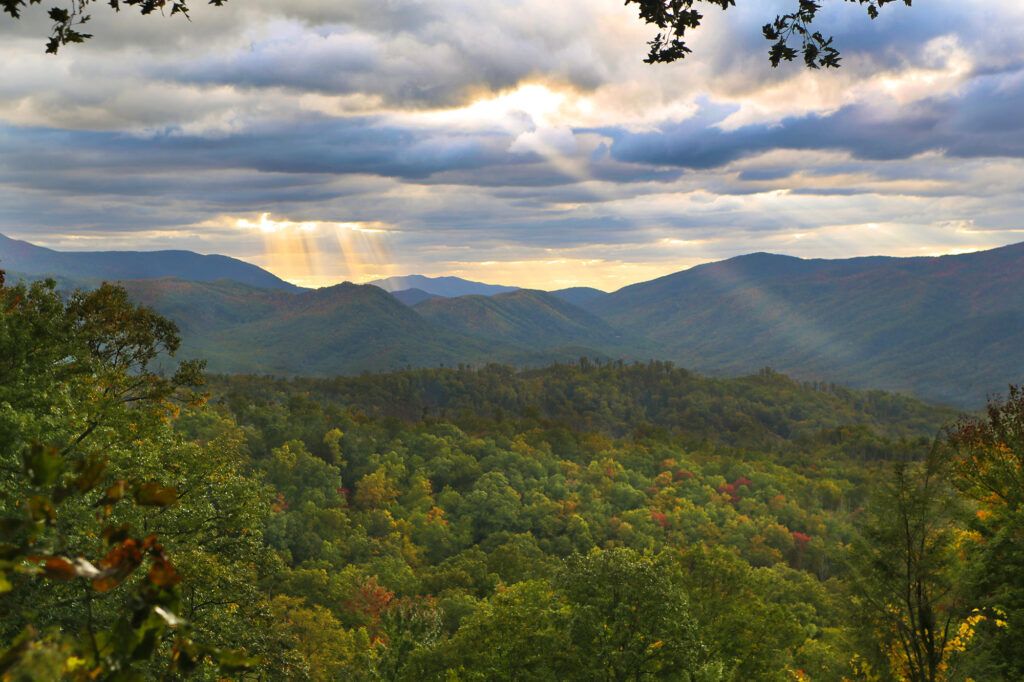
On our very first trip to The Great Smoky Mountains National Park we visited the Roaring Fork Motor Trail. It still remains one of our favorite places to visit. We especially love to travel it in the Fall and look at the amazing colors after the leaves have turned.
So if you are looking for that quintessential Smoky Mountain experience without spending all day on your feet, you have found it. The Roaring Fork Motor Nature Trail is one of those rare places where the transition from the hustle and bustle of Gatlinburg to the deep, mossy silence of the ancient forest happens in a matter of minutes.
The trail itself is a 5.5 mile, one way road that invites you to slow down and take a break from your busy life. The name comes from the Roaring Fork stream, which is one of the fastest flowing mountain streams in the entire National Park. Especially after a good Appalachian rain, you will hear exactly why the early settlers gave it that name. The water crashes over boulders and logs with a constant, rhythmic rumble that follows you for much of the drive.
What makes this drive so special to me is the sense of enclosure. The forest canopy here is thick, dominated by massive hemlocks and hardwoods that keep the air cool even in the middle of a Tennessee July. It feels like a temperate rainforest.
As you wind your way through the curves, you are treated to a rolling gallery of the park’s best features: rushing water, historic log cabins, and trailheads that lead to some of the most famous waterfalls in the region.
Must-See Stops Along the Trail
There are so many cool things to see on this road. It can be hard to pick where to stop. Here are five places you really should not miss. Each one has a parking area nearby so you can get out and explore.
Noah “Bud” Ogle Cabin
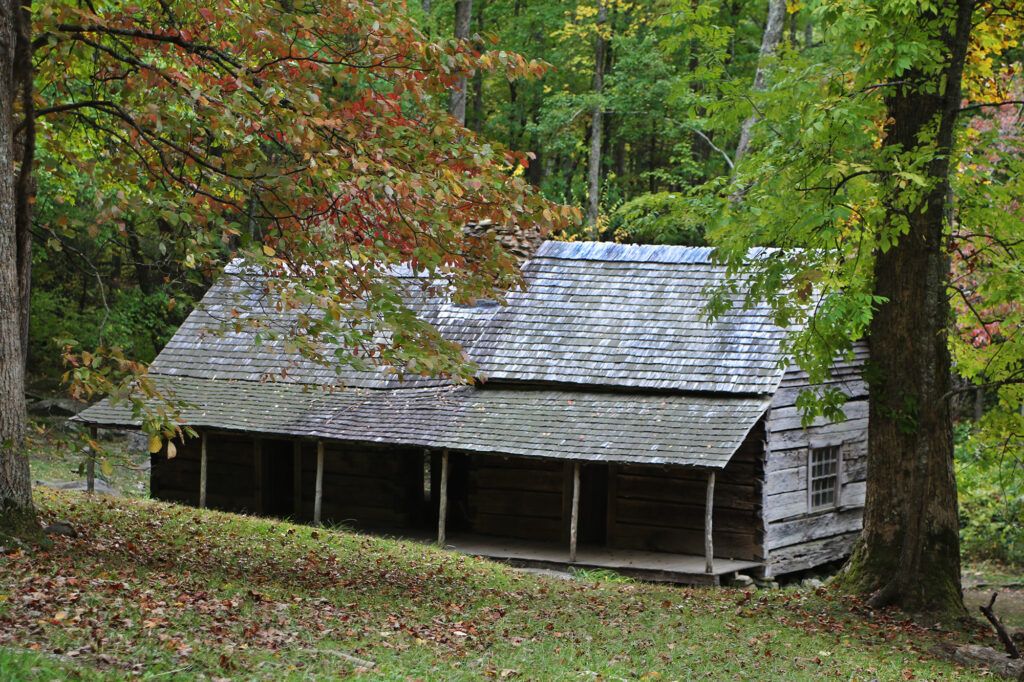
This is the very first stop you will see before you even get on the one-way part of the road. It is a great place to stretch your legs. You will see a big log cabin that is actually two cabins joined together by one roof. This is called a “saddlebag” cabin. It looks like two bags hanging over a horse!
You can also walk a short trail to see an old tub mill. This was a tiny building over a creek where the Ogle family ground their corn into meal. It is amazing to see how people lived way back in the 1800s without any electricity.
Rainbow Falls
Just beyond the Ogle farmstead, you will find the trailhead for Rainbow Falls. At 80-foot, the waterfall is the tallest single-drop waterfall in the national park. The hike to the falls is a 5.4 mile round trip and is considered moderately strenuous. It will typically take 3-5 hours to hike. If you plan to attempt this hike, be prepared for a steep ascent with an elevation gain of 1685 feet. The trail is uneven in many parts and rocky in some places. Be sure to wear sturdy hiking shoes or boots and carry plenty of water and snacks. This trail is not recommended for young children.
Grotto Falls Trail
If you like waterfalls, this is the most famous stop on the trail. The hike to the falls is about three miles round trip. The path is wide and easy to follow. The best part is that Grotto Falls is the only waterfall in the park that you can actually walk behind! It feels very cool and misty behind the wall of water. Just be careful because the rocks can be very slippery.
If you are lucky, you might even see a llama train on this trail. The park uses llamas to carry supplies up to the top of the mountain. For more photos of this beautiful spot, you can check out the gallery at https://southeastwaterfalls.com/grotto-falls/.
Jim Bales Homestead/Alex Cole Cabin
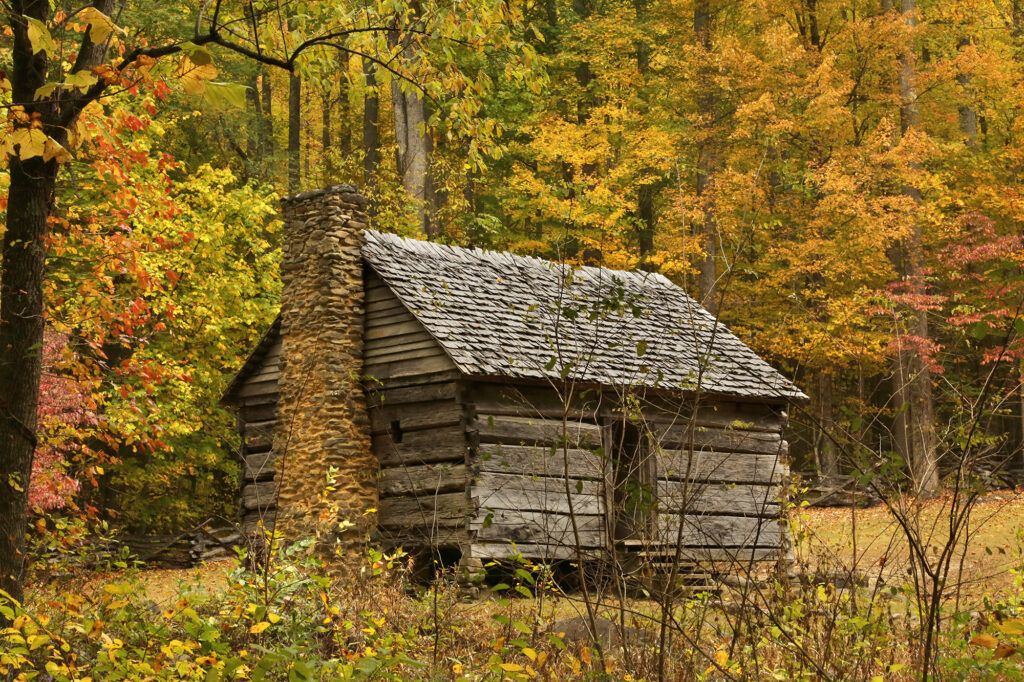
The former homestead of Jim Bales is located on stop 10 of the Roaring Fork Motor Trail. The corn crib and barn are Bales’s, but It was relocated here for preservation. Bales moved to the area in the 1860s and lived here until Great Smoky Mountains National Park was created in the early 1930s.
The cabin actually belonged to a man by the name of Alex Cole. It originally stood in the Sugarlands community near the Little Pigeon River. When the Great Smoky Mountains National Park was created in the 1930s, many old mountain homes were abandoned or removed. In the 1970s, preservationists moved the Alex Cole Cabin to the Jim Bales site to save it and to represent the pioneer lifestyle to visitors.
Ephraim Bales Homestead
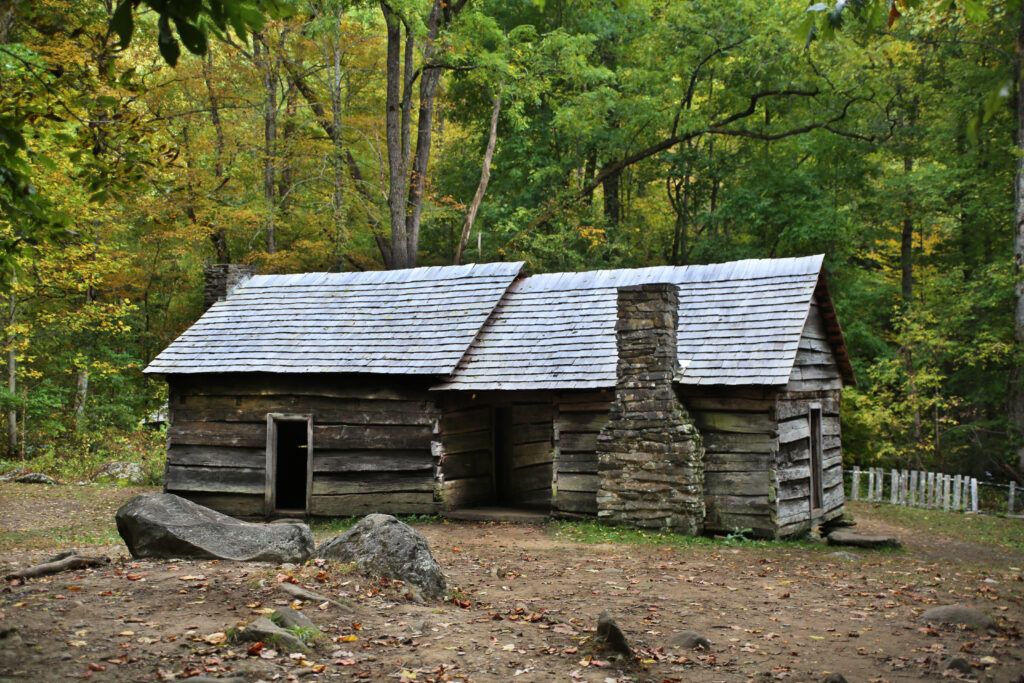
Further down the road, you will find the Ephraim Bales (brother of Jim Bales) family farm. Here Bales, his wife, and their nine children lived in a dog-trot cabin, which is two cabins placed side by side with space between and a common roof connecting the two buildings together. The open area was a covered walkway between the two cabins. This area was typically used as a sitting area and a passageway for air to flow through to help cool the place in the summertime. The larger cabin was the living area, while the second half was the kitchen.
Alfred Reagan Tub Mill
This stop is a favorite for people who love to take pictures. You will see a small house that is painted with bright colors. Most cabins in the woods were just plain wood, but Mr. Reagan liked his house to look fancy!
Right next to the house is another tub mill. This mill still has the wooden flume that carries water from the creek to turn the wheel. It is one of the best places on the drive to see how the settlers used the power of the water to do work.
Alfred Reagan Place
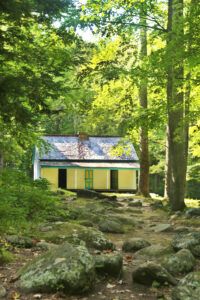
Alfred Reagan was a farmer and a jack of all trades. He had cattle, crops, fruit trees and timber. He also worked as a carpenter and blacksmith. In about 1900, the Roaring Fork community had become large enough to need a store, so Reagan built one, which he later turned over to his son. Soon later he opened a mill.
The Reagan house appears to be modern, but there is a log cabin at its core. By the late 1800s, log cabins had gone out of style, and instead of tearing them down and building a brand new house, owners simply put wood siding on the outside and inside, encasing the original cabin.
The Place of a Thousand Drips
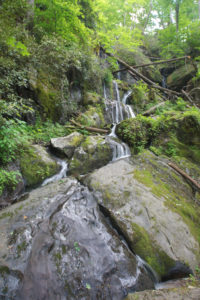
This is the very last stop on the loop. The best part is that you do not even have to get out of your car to see it! On the left side of the road, water trickles down a huge rock wall. It looks like hundreds of tiny waterfalls all in one spot – hence the name Place of a Thousand Drips
If it has rained recently, it is a spectacular sight. Unfortunately the first time we went was during the Fall, and it was a little underwhelming that time. Luckily, we went again in the Spring and the flow was much better.
It is a perfect way to end your trip through Roaring Fork. To see more about how this waterfall you can visit https://southeastwaterfalls.com/the-place-of-a-thousand-drips/.
Wildlife and Photography Tips
One of the most exciting parts of driving through Roaring Fork is the chance to see a real black bear! Many people visit the Smokies just to see one. In this part of the park, bears love to climb the tall hemlock trees or hunt for berries in the bushes.
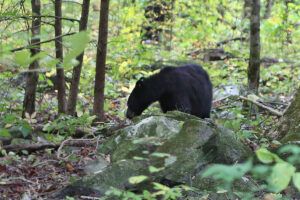
While I’ve only occasionally seen a black bear in my visits, you can find evidence of them all around. Remember most wildlife tries to avoid people. So if you want to see wildlife, you have to be very quiet and move slowly. The best times to see animals are early in the morning or right before the sun goes down. This is when the woods come alive.
Besides bears, keep your eyes peeled for wild turkeys walking through the leaves or white-tailed deer hiding in the shadows. You might even see a pileated woodpecker, which is a very large bird with a bright red head that makes a loud drumming sound on the trees.
When you see a bear, it is very important to stay safe. You must stay at least 150 feet away from them. That is about the length of three big school buses! If you are in your car, stay inside. If you are on a trail, give the bear plenty of space and never ever feed them. A fed bear is a dead bear.
For those of you who love taking pictures, Roaring Fork is like a giant outdoor studio. Because the trees are so thick, the light is soft and green. This makes it a great place to take photos of the old buildings and the rushing water. If you want to get a great shot of a waterfall, try to go on a cloudy day. The clouds act like a big light bulb cover that makes the colors look even better.
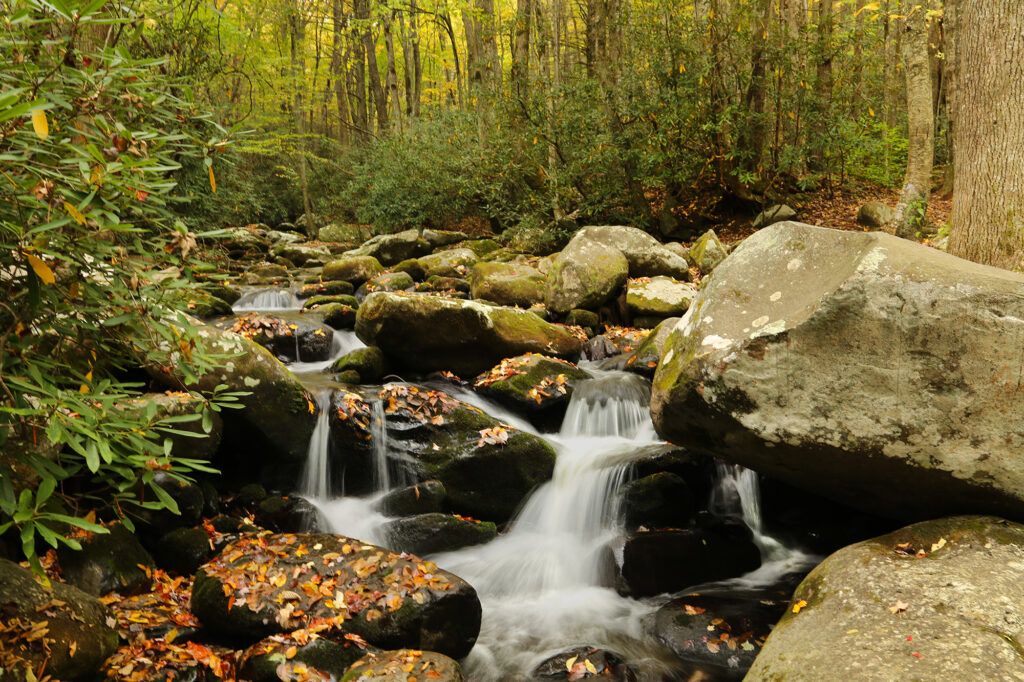
Don’t forget to look at the small things, too. There are beautiful green moss on the rocks and colorful wildflowers that change with the seasons. In the Spring, you can find white trilliums and violets. In the fall, the leaves turn bright orange and red, making the whole forest look like it is on fire. I’ve had a lot of fun taking photos of all of the plants in the area as well.
Tips to Consider for Your Trip
Before you set out, there are a few “traveler to traveler” tips to keep in mind for 2026. This is a very narrow, winding road with some tight turns. Because of this, the National Park Service has a strict “no trailers, RVs, or buses” rule. If you are driving a standard car, SUV, or truck, you are good to go, but anything larger simply won’t make the squeeze.
While the drive itself is free, remember that the park now requires a parking tag if you plan to stop for more than 15 minutes to take photos or hike. You can grab a daily pass for $5 at many kiosks in town or at the Sugarlands Visitor Center before you head up. Parking is only permitted in designated parking areas. Vehicles parked in non-designated areas can be ticketed.
This loop is also seasonal. It typically opens in early spring and closes for the winter around late November. If you are visiting during the peak of autumn or on a mid-summer weekend, I highly recommend getting to the entrance by 9:00 AM. Parking at the popular trailheads fills up faster than a mountain stream in a thunderstorm, and you don’t want to spend your mountain escape passing by all the sights you wanted to see.
Whether you are a photographer looking for that perfect shot of a moss-covered mill or a family hoping to spot a black bear from the safety of your SUV, Roaring Fork delivers. It is a beautiful, condensed version of everything that makes the Smokies special.
Know Before You Go
Planning a trip to Roaring Fork is easy, but a little bit of preparation goes a long way in making sure your day stays relaxing rather than stressful.
The road is 5.5 miles long, but don’t let the short distance fool you. Between the 10 mph speed limit, the frequent stops for photos, and the potential for “bear jams” (traffic stops caused by wildlife sightings), you should set aside at least two hours for the drive. If you plan on doing any of the hikes, like the trek to Grotto Falls, you should budget four to five hours for the total experience.
Directions to Roaring Fork
The first thing to know is how to actually get there.
From downtown Gatlinburg, you will want to turn at Traffic Light #8 onto Historic Nature Trail. You will follow this road as it turns into Cherokee Orchard Road and leads you right into the Great Smoky Mountains National Park. After about three miles, you will see the official entrance to the one way Roaring Fork Motor Nature Trail.
Seasonal Status
One of the most important things to check before you leave your hotel or campsite is the seasonal status of the road. For 2026, the Roaring Fork Motor Nature Trail is scheduled to be open from May 1 through November 29. During the winter months, the road is closed to all vehicle traffic due to the steep grades and the likelihood of ice. Even in the spring and fall, the park rangers might close the gates temporarily if a heavy storm moves through, so it is always a smart move to check the park’s road status page if the weather looks iffy.
Important Things to Consider
As I mentioned before, vehicle size is a huge factor here. I have seen folks in large dually trucks or long vans struggle with some of the tighter, tree-lined curves. If you are towing anything or driving a RV, you will need to park it back in town or at your campground. There is absolutely no room to turn around once you are on the one way section.
Cell service is another thing to consider. Once you dip into the Roaring Fork valley, your cell service is likely to disappear. I always suggest downloading an offline map or picking up one of the inexpensive trail booklets at the entrance. These booklets are great because they correspond to numbered stakes along the road, giving you the backstory on the homesteads and natural features you are seeing.
Parking Pass – You’ll Probably Want to Get It
Lastly, let’s talk about the “Park It Forward” program. As of 2023, the park requires a valid parking tag for any vehicle stopping for more than 15 minutes. This applies to all the pull-offs and trailhead lots along Roaring Fork and anywhere else inside the Great Smoky Mountains National Park.
Note: You can’t actually buy the tags on the Motor Nature Trail itself, so make sure you have yours displayed on your dashboard before you enter the loop. It is a small price to pay to help maintain the beautiful historic structures and trails we all enjoy. These funds are currently being used for the renovation of the Laurel Falls trail (Note: Laurel Falls Trail is closed as of Jan. 6, 2025 for 18 months of rehabilitation work.) and parking area.
For more details on the waterfalls you can check out our site https://southeastwaterfalls.com/ to see which falls are flowing best during your visit. We’ll be linking to them through out article, and also have information about other near by locations and waterfalls.
Conclusion
The Roaring Fork Motor Nature Trail is truly a special gem in the Great Smoky Mountains. It gives you a chance to see deep forests, rushing water, and old pioneer cabins without needing to be a professional hiker. Whether you spend your time spotting black bears from your car window or walking behind the falling water at Grotto Falls, you are sure to leave with some amazing memories.
This road shows us how life used to be for the families who lived in these mountains a long time ago. Seeing the hand-built cabins and the clever water mills makes you appreciate the beauty and the history of this land even more. It is the perfect afternoon escape if you want to leave the busy streets of Gatlinburg behind for a little while and breathe in the fresh mountain air.
Before you head out, make sure your camera battery is full and you have your parking tag ready on your dashboard. Remember to take your time and enjoy every curve of the road. The Smokies are full of surprises, and Roaring Fork is one of the best places to find them.
If you are planning your next waterfall hike, be sure to look through our site Southeast Waterfalls for all the best local information.
One last tip is to check the weather before you go. If it has been raining a lot, the waterfalls will be huge and beautiful, but the road might be a little muddy in spots. If it is a very foggy day, the woods look like a fairy tale, but you will need to drive even slower. No matter when you go, Roaring Fork is a place you will remember for a long time. It is the best way to see the wild side of the Smoky Mountains right from your car window!
Leave a Reply